Friday, September 20, 2024

Nostalgic Byte: How Wirthian Languages Shaped My Programming Journey (And Made Me Quirkier)

Ah, Wirthian languages—those delightful relics of the programming past that have somehow managed to stick around, like the old family computer that still boots up (most of the time). As I embarked on my programming journey, these quirky languages, birthed by the legendary Niklaus Wirth, played an unexpectedly pivotal role in shaping my approach to software development (and let's be honest, they made me just a tad quirkier). From the rigorous structure of Pascal to the elegant simplicity of Modula-2, Wirthian languages introduced me to a world where precision met creativity, and where my burgeoning love for computer science found a cozy, albeit nerdy, home. In this piece, I'll take you on a nostalgic byte-sized adventure through these programming languages, sharing how they influenced my learning, honed my coding instincts, and added an extra dash of whimsy to my tech endeavors (spoiler alert: there's more to life than just C++).

The Quirky Charm of Wirthian Languages

Discovering Wirthian Languages

Stumbling upon Wirthian languages was like discovering a secret level in an old-school arcade game (cue pixelated adventures). In the early days of my programming journey, I wasn't just learning to code—I was unraveling a tapestry woven with peculiar syntax and untapped potential. These languages, particularly Pascal, were my first foray into structured programming. It was like learning to play chess after years of checkers. The discipline these languages instilled was invaluable; they demanded clarity and logic, which were sometimes missing in more mainstream languages. Modula-2, with its modular design, taught me the importance of organization in software development—a lesson as crucial as knowing when to stop debugging at 3 a.m. (spoiler: never). As I navigated the quirks of these languages, I found a surprising camaraderie with fellow enthusiasts, united by a love for the unorthodox paths less traveled in computer science.

Why Wirthian Languages Stand Out

Wirthian languages stand out like that lone eccentric genius in a room full of suits. What makes them unique is their emphasis on simplicity and elegance—traits often overshadowed by the flashier capabilities of modern programming languages. Pascal, for instance, is renowned for its clarity and teaching potential, making it a staple in computer science education. It was my go-to for grasping programming fundamentals without getting bogged down by unnecessary complexity. Meanwhile, Modula-2 introduced me to the concept of modularity long before it became a buzzword. This approach to software development meant breaking down programs into manageable pieces—like assembling a LEGO set without the fear of losing a crucial brick. These languages encouraged a disciplined yet creative mindset, steering me away from the spaghetti code traps that many beginners fall into. Their minimalistic nature forced me to be resourceful, fostering a deeper understanding of programming concepts that are often glossed over.

Wirthian Languages in Modern Programming

In today's tech landscape, Wirthian languages might seem like relics, yet they hold a surprising relevance. Their principles continue to influence modern programming practices, silently shaping the way we write code. Concepts such as strong typing, modularity, and structured programming, championed by languages like Pascal and Modula-2, are foundational to many contemporary languages, including Python and Java. They emphasize readability and maintainability—qualities every developer secretly (or not-so-secretly) craves when facing a mountain of legacy code. Moreover, these languages foster a mindset focused on precision, which is invaluable in today's software development environment where bugs can mean the difference between success and chaos (we've all been there). While you might not see Wirthian languages in job postings, their influence persists in education and niche projects. They serve as a reminder of the beauty in simplicity and the power of a well-structured program, guiding us even amidst the rapid evolution of technology.

My Programming Journey with Wirthian Languages

Early Days of Learning Programming

My initiation into the world of programming was anything but conventional, much like stumbling onto a treasure map hidden in plain sight. The early days were all about discovery, and Wirthian languages played a starring role. They were my first mentors, guiding me with a gentle but firm hand through the maze of logic and syntax. With Pascal, I learned the art of writing clear, structured code—a skill that I soon realized was as rare as finding a perfectly working floppy disk. Those initial coding exercises felt like solving intricate puzzles, where each piece needed to fit just right (or else face the wrath of the compiler). Modula-2, with its modular approach, taught me the importance of organization, a lifesaver when tackling larger projects. These languages didn't just teach me how to code; they fashioned a unique lens through which I view software development, blending rigor with creativity and encouraging a quirky sense of adventure.

Programming Influence of Wirthian Languages

The influence of Wirthian languages on my programming journey is akin to discovering a secret recipe that transforms a basic dish into a culinary masterpiece. These languages instilled a discipline that has been invaluable in my software development endeavors. They taught me early on the significance of clean code—how a well-organized program is not just easier to debug but also a joy to revisit (shocking, I know). Pascal's emphasis on structured programming laid the groundwork for my understanding of complex algorithms, while Modula-2's modularity became my guiding principle in designing scalable systems. These foundational skills have transcended time, proving useful even as I ventured into more modern programming languages. The principles of clarity, precision, and modularity instilled by Wirthian languages continue to influence my coding style, encouraging a meticulous approach that balances creativity with logic. They have been a constant reminder that good programming isn't just about making things work—it's about crafting solutions that stand the test of time.

Software Development and Personal Growth

Navigating the realm of software development with Wirthian languages was akin to embarking on a hero's journey, where each coding challenge spurred not only technical growth but personal evolution. As I wrestled with the intricacies of Pascal and Modula-2, I developed patience and resilience—traits essential not just in debugging but in life itself (because if you can survive a segmentation fault, you can survive anything). The rigor of structured programming honed my problem-solving skills, teaching me to approach complex problems with a logical mindset and an eye for detail. This journey wasn't just about learning to code; it was about understanding the beauty of crafting something meaningful from lines of text. The principles I absorbed—clarity, modularity, and precision—became cornerstones of my personal and professional philosophy. These languages taught me to embrace challenges, celebrate small victories, and persist through setbacks, fostering a growth mindset that extends far beyond the realm of software development.

Reflections on Wirthian Languages and Beyond

Nostalgia in Computer Science

Reflecting on my time with Wirthian languages brings a wave of nostalgia akin to finding an old mixtape from your high school days. In the fast-paced world of computer science, where new languages and frameworks emerge at lightning speed, it's comforting to look back at the simpler, yet profoundly impactful, tools that shaped my journey. The structured discipline of Pascal and the modular elegance of Modula-2 were more than just stepping stones; they were companions in my early explorations of programming. These languages remind me of a time when coding was as much about personal discovery as it was about technical achievement. They evoke memories of late-night coding marathons, the thrill of the first successful compile, and the camaraderie of fellow enthusiasts. In today's tech landscape, this nostalgia serves as a reminder of the enduring value of foundational skills and the timeless joy of creating something from nothing in the vast universe of computer science.

Embracing Quirkiness in Coding

Embracing quirkiness in coding is like letting your inner geek strut its stuff on the digital runway. Wirthian languages, with their unique blend of rigor and creativity, taught me that there's beauty in the unconventional and strength in standing out. These languages encouraged me to think differently, to approach problems with a quirky perspective that often led to innovative solutions. It's this spirit of individuality that makes coding more than just a technical exercise—it's an art form. As I continue to develop software, I carry forward the lessons of embracing my quirks, whether it's experimenting with unusual algorithms or crafting code that's not just functional but delightful. In a world that often values conformity, the influence of Wirthian languages reminds me to celebrate the oddities and eccentricities that make us unique. After all, coding isn't just about fitting into a mold; it's about breaking the mold and creating something truly distinctive.

The Future of Programming Languages

Looking ahead, the future of programming languages is as exciting as it is unpredictable. As technology continues to evolve, new languages will emerge, each promising to address the challenges of the digital age with innovative features and paradigms. Yet, the foundational principles championed by Wirthian languages—clarity, modularity, and precision—will remain relevant. These core tenets will continue to influence the design of future languages, ensuring that developers have the tools to create robust, maintainable, and efficient software. As artificial intelligence and machine learning become more integrated into our coding practices, languages will need to adapt, offering more abstraction while retaining the capacity for deep customization. The push towards more accessible and inclusive programming environments will also shape the development of new languages, making coding more approachable for everyone. While the specifics of what comes next are uncertain, the enduring influence of past languages ensures that the essence of programming—creativity combined with logic—will always be at the heart of technological progress.

Thursday, September 19, 2024

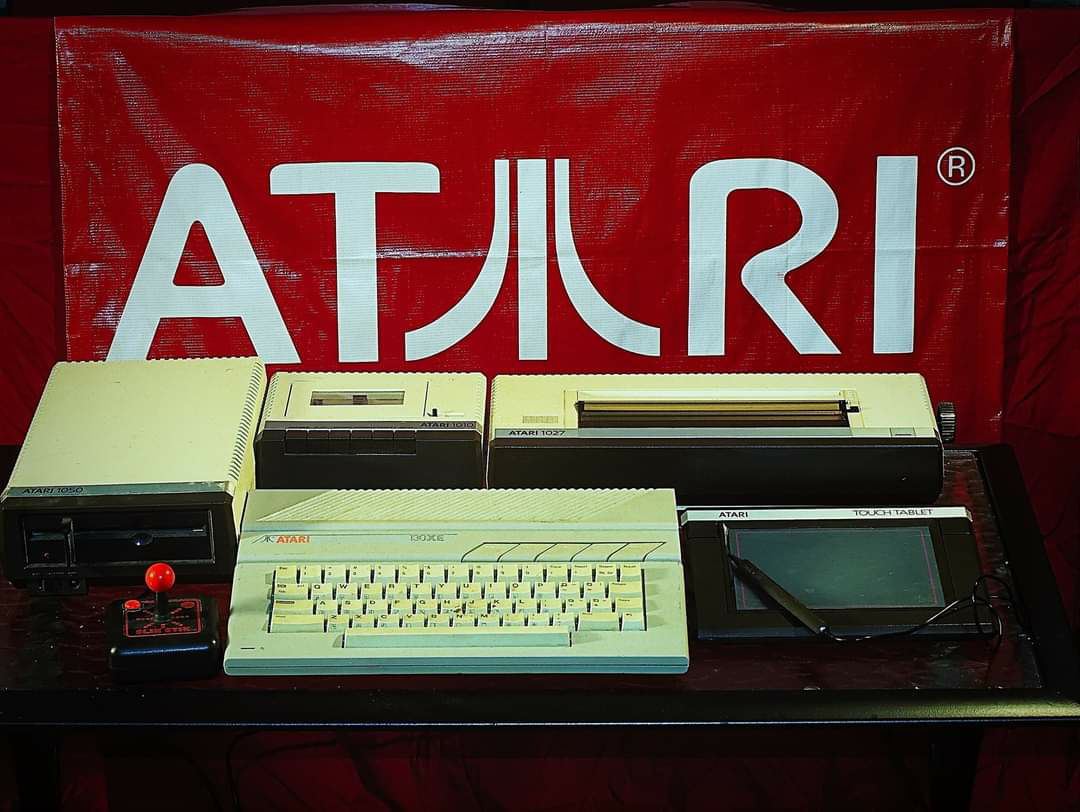
Blast from the Past: I'm a longtime Atari Enthusiast.

This photo is a reminder of when when home computing was in its infancy, a realm of excitement and endless possibilities.

The vibrant red backdrop of the Atari banner sets the stage for the photo of this part of my collection. The logo is a symbol of innovation and the golden age of gaming and home computers.

Front and center, the Atari 130XE computer proudly displays its sleek, grey casing, ready to boot up classic games and educational software. Beside it, the Atari 1050 disk drive, a technological marvel in its day, hints at hours spent loading programs from floppy disks. An Atari 1010 cassette drive sits alongside the 1050 (now we're really talking about hours). Next to it is the Atari 1027 letter quality printer. The iconic Atari Touch Tablet, an early foray into touch-screen technology, lies to the right, inviting creative exploration.
A joystick, its red button poised for action, rests near the keyboard, hinting at countless battles fought in pixelated worlds.

Yeah, I'm a passionate Atari enthusiast, and I've happily preserved these relics of computing history. Countless hours were spent exploring virtual landscapes, writing my first lines of code, and creating digital art on the touch tablet.

It's a snapshot of a bygone era, a reminder of the technological leaps that paved the way for the modern computing world. It evokes a sense of nostalgia in me, reminding me of the joy and wonder of early home computing experiences. This photo is my affirmation of the enduring legacy of Atari and its groundbreaking technology.


#retrocomputing #atari

36 minutes ago

Wednesday, September 18, 2024

Embrace the Beauty of Night Photography

🌃📸 Embrace the Beauty of Night Photography 🌟✨

As the sun sets and the world is painted with the hues of twilight, a new canvas awaits photographers who dare to venture into the night. 🌌 Capturing the magic of the moonlit sky, the glow of city lights, or the ethereal trails of light painting, night photography offers an enchanting opportunity to explore your creativity. 🎨

📷 Essential Tips for Night Photography:

1️⃣ Stability is key: Invest in a sturdy tripod to ensure sharp images during long exposures.

2️⃣ Choose the right settings: Use manual mode and experiment with ISO, aperture, and shutter speed for optimal results.

3️⃣ Focus manually: In low-light conditions, manual focus can be more accurate than auto-focus.

4️⃣ Use a remote shutter release or timer: This will minimize camera shake during long exposures.

5️⃣ Get creative with light: Experiment with different sources of light, such as streetlights, moonlight, or artificial lights, to create captivating compositions.

🌠 Unleash your creative spirit and let the stars be your guide as you venture into the captivating world of night photography! Share your mesmerizing night shots with us using #NightPhotographyAdventures.

Sip in Style: A Guide to Choosing the Perfect Ceramic Mug

Are you a coffee or tea lover looking for the perfect ceramic mug? Look no further! In this blog post, we'll explore the different types of ceramic mugs available and help you choose the perfect one to elevate your drinking experience.

Types of Ceramic Mugs

- Classic: Simple, elegant, and timeless, classic ceramic mugs are perfect for everyday use and come in a variety of colors and sizes.
- Novelty: For those who love to express their personality, novelty ceramic mugs come in a range of fun and quirky designs, from cute animals to witty slogans.
- Travel: Designed to keep your drinks hot (or cold) on the go, travel ceramic mugs are durable and often feature leak-proof lids.
- Handmade: For those who appreciate artisanal craftsmanship, handmade ceramic mugs offer unique designs and are often made with sustainable materials.

Factors to Consider

- Size: Choose a mug that fits your preferred drink volume, whether it's a small espresso or a large cup of tea.
- Shape: Consider the shape of the mug's handle and base to ensure a comfortable grip and stability.
- Durability: Opt for high-quality ceramic materials that are dishwasher and microwave safe.
- Style: Choose a mug that reflects your personal taste and style.

Conclusion

A ceramic mug is more than just a functional item – it's a way to express your personality and elevate your drinking experience. By considering the factors above, you can find the perfect ceramic mug to suit your needs and taste. So go ahead, sip in style!

Friday, May 3, 2024

The Surprising Connection Between Atari Serial Ports and Modern-Day USB

Do you remember the iconic Atari computers from the 80s? They were revolutionary for their time and paved the way for modern-day computing. However, did you know that there’s a surprising connection between the Atari serial port and the ubiquitous USB ports we use today?

Back in the day, Atari computers used a serial port called SIO (Serial Input/Output) to connect to peripherals like floppy disk drives, modems, and printers. The port itself was called the “Serial Port', but I'm sticking to referring to the whole  system as "The SIO” for convenience.  

The SIO port was designed by Joe Decuir, a brilliant engineer who played a pivotal role in shaping the world of personal computing.  Unlike other systems at the time, the SIO was “smart" and could recognize various peripherals daisy-chained together to the computer.

With a Ph.D in Electrical Engineering from the University of Washington, Joe Decuir was a principle engineer at Atari from 1975 through 1978. While he worked at Atari, he helped design the Atari 2600, and of course, he developed the serial input/output system for the Atari 400 and Atari 800 computers. Following his years at Atari, he worked for Amiga Corporation, where he helped design the Amiga computer - and then for companies such as Apple, Silicon Graphics, and Hewlett-Packard.

So, let's jump to the 1990s when a group of companies, such as Intel, Microsoft, and IBM, were working together to develop a new standard for connecting peripherals to computers. The goal was to create a technology that was faster, more flexible, and easier to use than the existing serial and parallel ports. The result was the Universal Serial Bus, or USB, which is now an industry-standard interface used by billions of devices worldwide.

But what does this have to do with the Atari serial port? Well, it turns out that the design of the USB protocol was heavily influenced by Joe Decuir’s work on the SIO port. In fact, Decuir is often credited as a major contributor to the development of USB.

As mentioned previously, the SIO port was way ahead of its time and provided many of the same features that we now take for granted with USB, such as plug-and-play connectivity and support for a wide range of peripherals. It even had its own version of a device driver model, allowing peripherals to be automatically recognized and configured by the computer. In many cases, this meant that the peripherals themselves had to be smart, to communicate with the computer; generally using a MOS 6507 chip and associated coding.

In conclusion, the Atari serial port played a crucial role in shaping the world of computing as we know it today. So the next time you plug in a USB device, remember that you owe a debt of gratitude to the groundbreaking work of Joe Decuir and the Atari SIO port.

Sunday, March 26, 2023

Remembering my first computer

The Atari 400

Image: Evan-Amos CC BY-SA 3.0

Once upon a time, in the late 1970s, Atari was a dominant player in the video game industry, but they had aspirations to expand beyond just gaming. They wanted to create a personal computer that could compete with the likes of Apple and Commodore.

In 1979, Atari introduced the Atari 400, their first attempt at a personal computer. The Atari 400 was a sleek and compact machine with a unique design that set it apart from its competitors. It had a built-in keyboard and a cartridge slot for games and other software.

The Atari 400 was powered by a custom 6502 processor and had 8 kilobytes of RAM. It also had a built-in graphics and sound chip that allowed it to display colorful graphics and produce high-quality sound.

Despite its impressive features, the Atari 400 was not a commercial success. One of the main reasons for this was its membrane keyboard, which was not very responsive and made typing a frustrating experience. In addition, the computer was marketed mainly as a gaming machine, which limited its appeal to a broader audience.

Despite its limited success, the Atari 400 paved the way for Atari's later personal computers, such as the Atari 800 and the Atari ST. These machines were more powerful and more successful than the Atari 400, but they owe their existence to the pioneering work done by the Atari 400 team.

Today, the Atari 400 is a cherished artifact of computing history, and many enthusiasts still enjoy tinkering with and collecting these early machines. They serve as a reminder of the early days of personal computing and the pioneering work done by companies like Atari to bring computers into the mainstream.


Tuesday, October 15, 2019

I am in the wrong business

TL;DR - wherein the Fortnite fiasco teaches me how much my marketing sucks.

That whole Fortnite black hole experience was a bit disheartening.
I felt bad for the people like Rowan, Adrian, and Shae that were waiting for the new season and having to sit through all of that, of course. However, I'm not that into the game, so that was not what was on my mind during a lot of it.

We were all sitting there in the living room, watching the black hole on the PS4/television, or playing the mini-game that came up with the use of the Konami code. Meanwhile, during a large part of the outage, Shae and Rowan were on their phones, trying to get more information about what was going on and following the streams of various YouTubers.

Holy Crap. I'm mostly following the ones that Shae is watching because I'm sitting by her on the love seat and massaging her feet. This one that she is watching is getting many hundreds of thousands of views, a quarter-million likes, and a metric shit-ton of new subscribers - all things that that particular YouTuber said was totally unusual, and that he normally got a few hundred to a few thousand viewers during his streams.

All of this for, in essence, nothing. He was streaming the exact same thing that was on our TV, with a four to five-second delay to boot. No new information, no details of what was going on. He was passing on some miscellaneous information that people chatting on his channel were saying, but that was about it. There was a small skit or two. He was also updating the info on his screen for newcomers to his channel, so that was nice.

Yet there he was having almost constant donations of $4, $10, and $25 streaming across his feed. There was even one for $500. All for basically giving
us the same available information that we were getting by having the PS4 turned on in our living room. Just to be clear, this isn't a dig at him. He was very entertaining, did the best that he could with the information that was available, and toughed things out for many hours.

It did, however; make me realize how much I suck at marketing. Shae and I both have stores where various things that we have personally designed are available. Tee shirts, mugs, hoodies, leggings, wall art, pillows, etc.

We have my fixed income from the military disability to rely on for our monthly expenses. With the bankruptcy, there is pretty much no discretionary income. This is bad in most months, but even worse the last two months, where due to broken air-conditioning and extremely hot weather here in South Texas, our power bill has totaled more than $800 over the two month period.

So we have these stores, and even though I get hundreds of likes, favorites, pins, and comments or whatnot per month, we struggle to come up with one sale per month. Considering the fact that I only make about $4-$6 in profit per sale, that doesn't even pay for the cost of keeping my store open, which is $30 per month for the website.

Ah well. It's been like this for years, and I don't see it changing in the future. I just wanted to rant for a little bit after watching someone bringing in many thousands of dollars streaming something I was watching on my own television.